
Best AI Medical Scribes 2026: Top 10 Tools Compared
A comprehensive guide of 10 AI scribe platforms. See which one delivers the best accuracy, speed, and value for your practice.

Written by the Commure Scribe Team
February 4, 2026
•
5 min read
Clinical documentation is the silent crisis in modern healthcare. Clinicians currently spend nearly two hours on administrative tasks for every one hour of direct patient care. This burden effectively turns highly trained clinicians into data entry clerks and drives record levels of burnout.
The solution has arrived in the form of AI medical scribes. These ambient listening tools are revolutionizing the exam room by generating structured notes automatically. In 2026, the market is flooded with options, but not all AI scribes are created equal.
We tested and compared the 10 best AI medical scribes of 2026 to help you reclaim your time. Whether you are a solo practitioner or a health system leader, this guide breaks down the features, accuracy, and pricing you need to know.
What is an AI Medical Scribe?
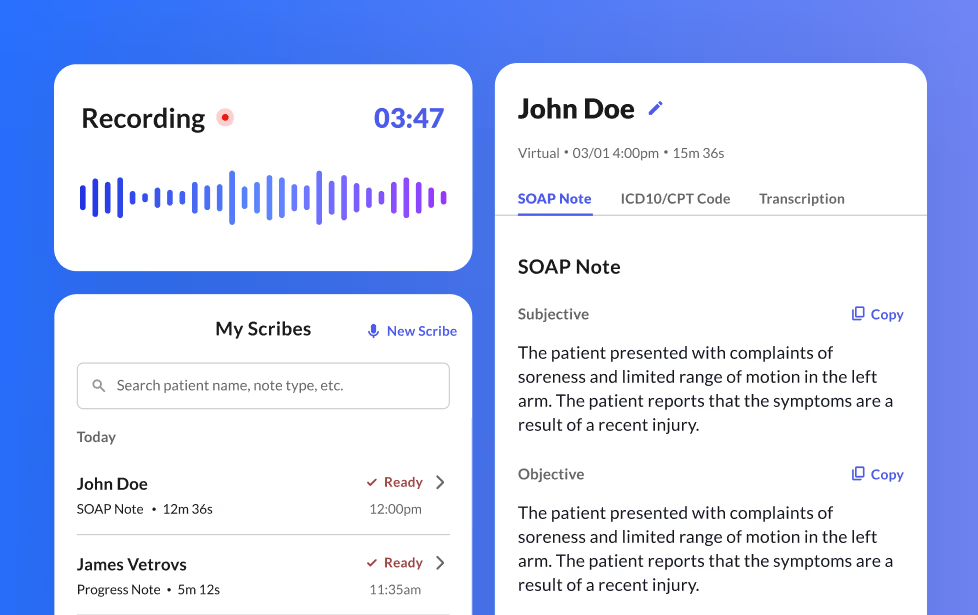
An AI medical scribe is a software solution that uses advanced natural language processing (NLP) and ambient listening to document patient encounters in real-time. Unlike old-school dictation tools that require you to speak like a robot, modern AI scribes listen to natural conversation.
The software filters out small talk, extracts relevant medical data, and formats it into a structured clinical note (such as a SOAP note) within seconds. The best tools in 2026 offer:
- Ambient Listening: Captures dialogue without wake words or special commands.
- Structured Notes: Automatically generates H&P, SOAP, and progress notes.
- EHR Integration: Syncs documentation directly into electronic health records.
- Medical Coding: Suggests appropriate CPT and ICD-10 codes.
How We Ranked the Top AI Scribes
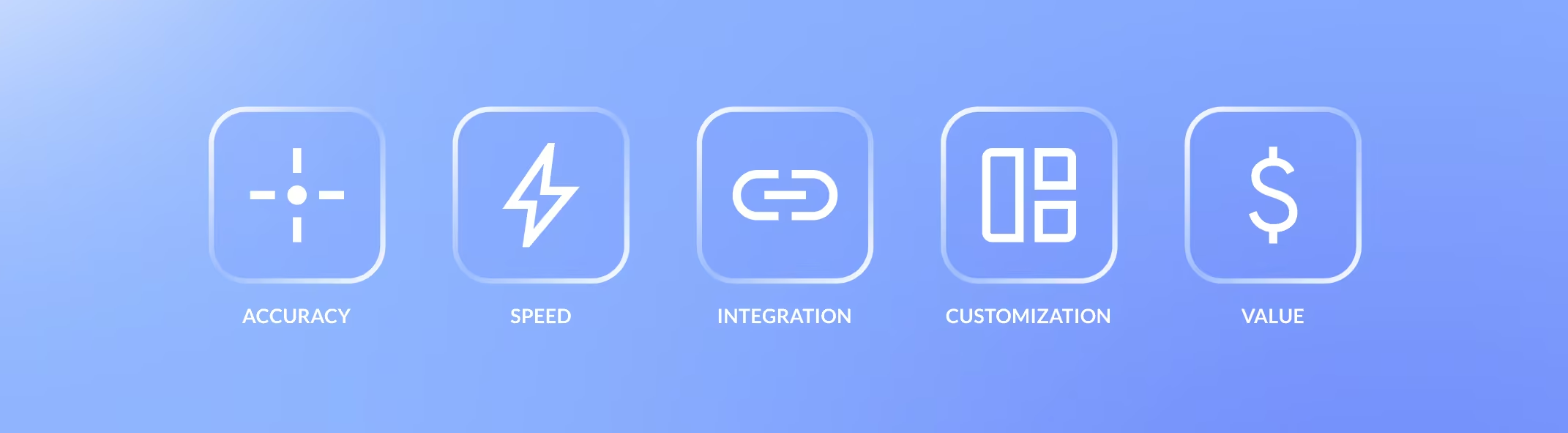
To determine the best tools on the market, we evaluated them based on the metrics that impact your daily workflow:
- Accuracy: Does it understand complex medical terminology and accents?
- Speed: How fast is the chart ready after the patient leaves?
- Integration: Does it write directly to the EHR or require copy-pasting?
- Customization: Can it learn your specific documentation style?
- Value: Is the pricing transparent and sustainable for your practice?
Here are the 10 best AI medical scribes of 2026.
1. Commure Scribe – Best Overall AI Medical Scribe
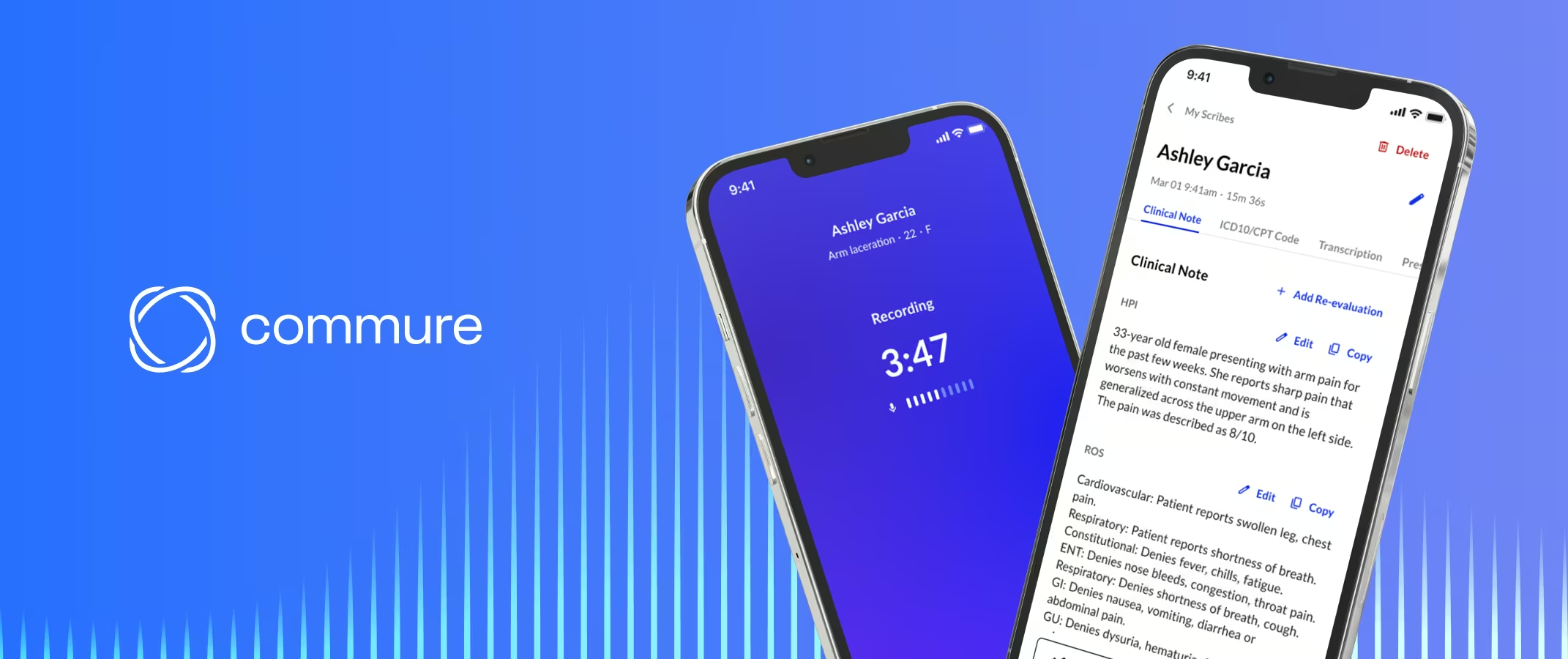
Commure Scribe combines enterprise-grade accuracy with a user-friendly interface that distinguishes between provider, patient, and family voices. Utilizing proprietary Large Language Models (LLMs), it achieves an industry-leading 99.7% accuracy rate and a 43-second average chart closing time, effectively eliminating "pajama time" for clinicians.
While individual providers get a seamless workflow, the deepest level of automated EHR syncing, where data is pushed directly into fields without clicks, is generally unlocked at the Enterprise tier.
Best fit: Providers and practices seeking the highest accuracy and speed at a sustainable price point.
Key Features:
- 99.7% Accuracy with proprietary clinical LLMs
- 43-second chart completion time
- Native integration with 35+ EHRs (Epic, Athena, Cerner)
- Automated CPT and ICD-10 coding suggestions
Pricing:
- $59/month (Annual plan)
- $89/month (Monthly plan)
2. Freed – Best for beginners
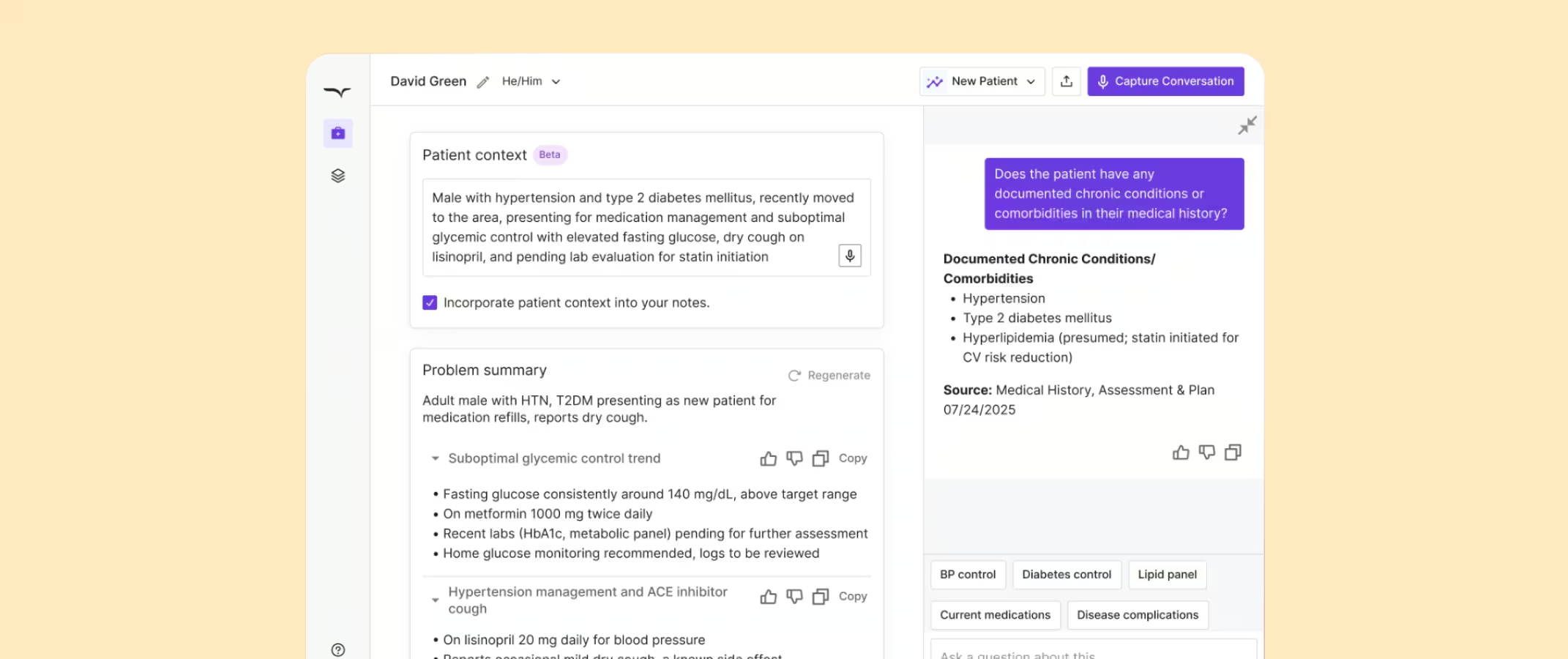
Freed has gained popularity through aggressive marketing and a simple interface, making it a solid entry-level option for clinicians who want to try ambient scribing without a complex setup. It features a simple "Get Freed" button to start notes and a self-learning style that improves over time.
However, Freed lacks the technical depth of top-tier solutions and relies on a manual copy-and-paste workflow, which can add friction in high-volume clinics.
Best fit: Solo providers who prioritize simplicity over workflow speed.
Key Features:
- Simple "one-click" interface
- Self-learning style preferences
- Unlimited visits for a flat fee
- HIPAA-compliant
Pricing:
- $84/month
3. Nabla – Best for speed and browser flexibility
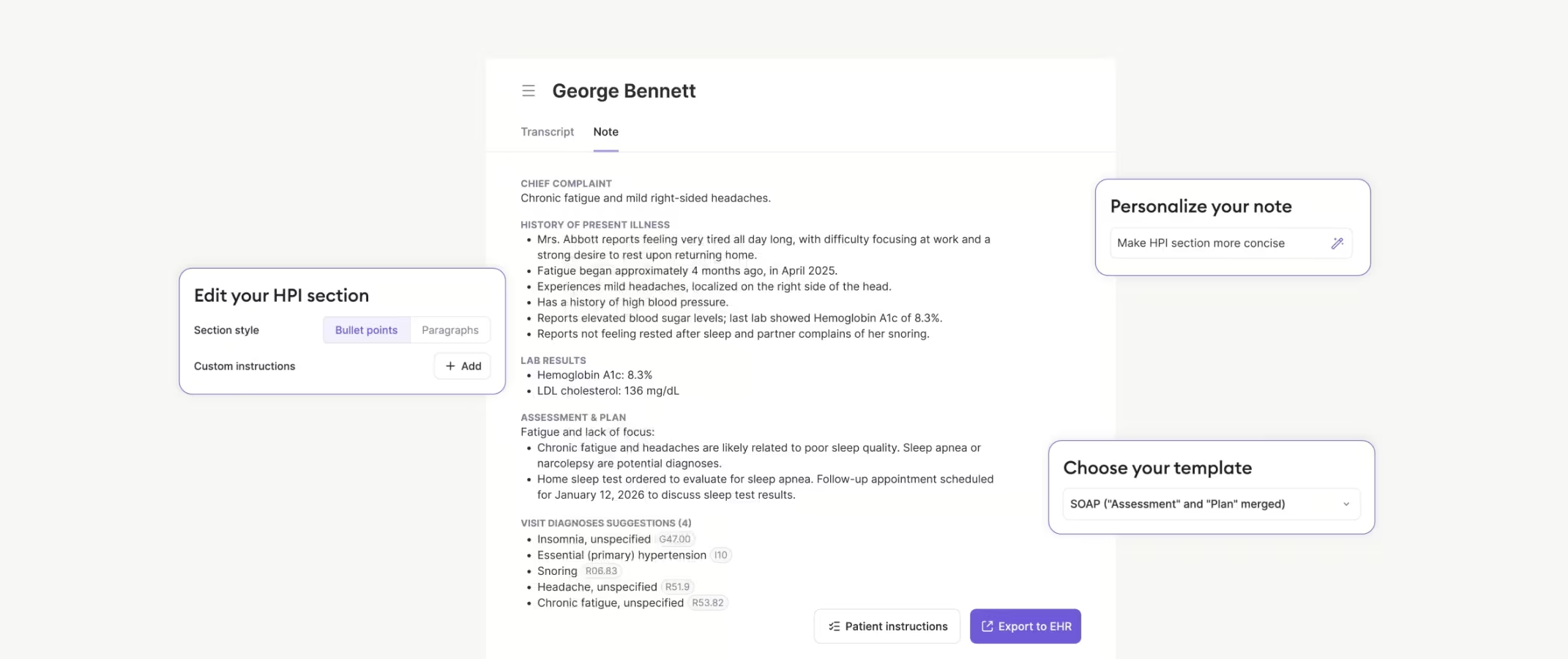
Nabla Copilot is a fast, modern contender designed to sit quietly in the background or run as a Chrome extension. It generates notes in seconds and offers customizable "magic buttons" for specific instructions, making it a flexible choice for tech-savvy users who want a lightweight tool.
Because it often functions as an overlay rather than a native part of the EHR, formatting often requires more manual tweaking than Commure Scribe’s templates, and deep integration is limited.
Best fit: Tech-savvy users who utilize web-based EHRs.
Key Features:
- Works as a Chrome extension or web app
- Rapid note generation (often under 30 seconds)
- Available in multiple languages
- Customizable "magic buttons" for instructions
Pricing:
- $119/month (Pro plan)
- Free tier (limited visits) available
4. DeepScribe – Best for Oncology and Enterprise
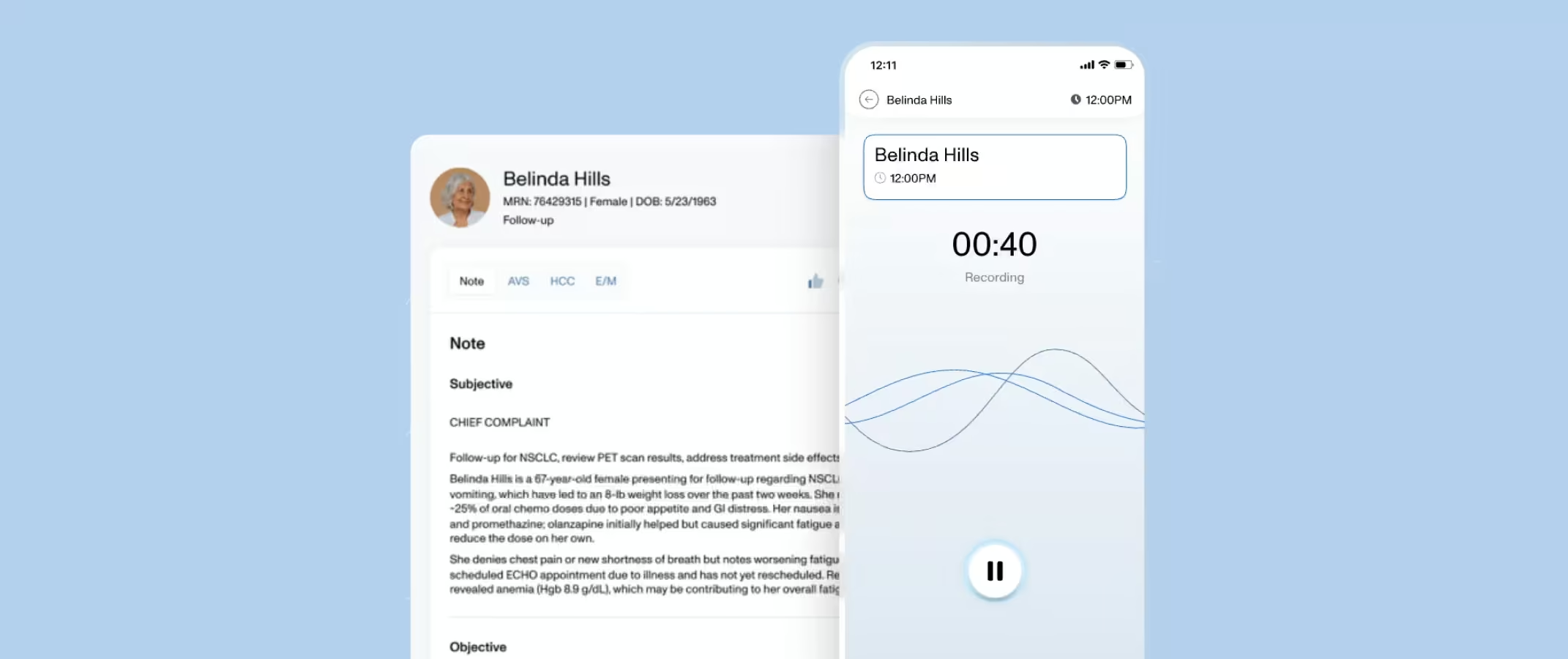
DeepScribe markets itself as an "Ambient OS" rather than just a scribe, focusing heavily on specialty care with specific features tailored for complex workflows like Oncology. It offers strong integration with major hospital systems and pre-charting capabilities.
DeepScribe is powerful, but implementation often requires IT support and a sales-driven setup, making it difficult for independent practices to adopt quickly compared to more agile platforms.
Best fit: Oncology centers and large organizations with IT support.
Key Features:
- Customizable for oncology workflows
- Ambient OS with pre-charting capabilities
- Strong integration with major hospital systems
- Focus on specialty compliance
Pricing:
- Enterprise Quote (Typically higher than individual plans)
5. Heidi Health – Best "Freemium" option
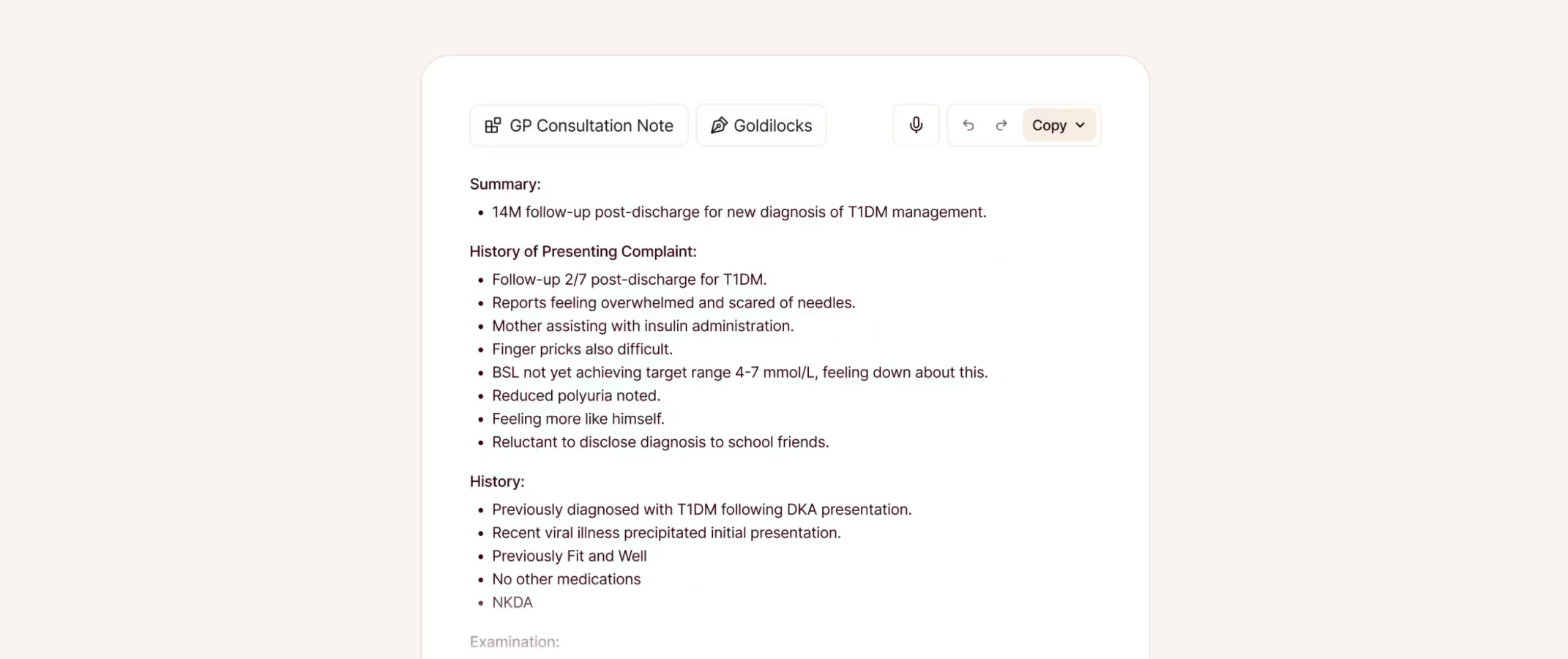
Heidi Health is an Australian-based platform that attracts users with a clean interface and support for over 100 languages. It offers a generous free tier that works across web and mobile, making it accessible for those just starting with AI.
However, the free tier acts mostly as a trial; serious clinical work requires the "Pro" plan, and like Freed, it struggles with deep EHR integration for smaller clinics, relying heavily on copy-paste.
Best fit: Clinicians wanting to test the waters or those with lighter patient volumes.
Key Features:
- Free tier available (with significant limits)
- Supports 100+ languages
- Works across web and mobile devices
- User-friendly interface
Pricing:
- ~$99/month (Pro)
- Free tier available
6. Nuance DAX Copilot – Best for major health systems
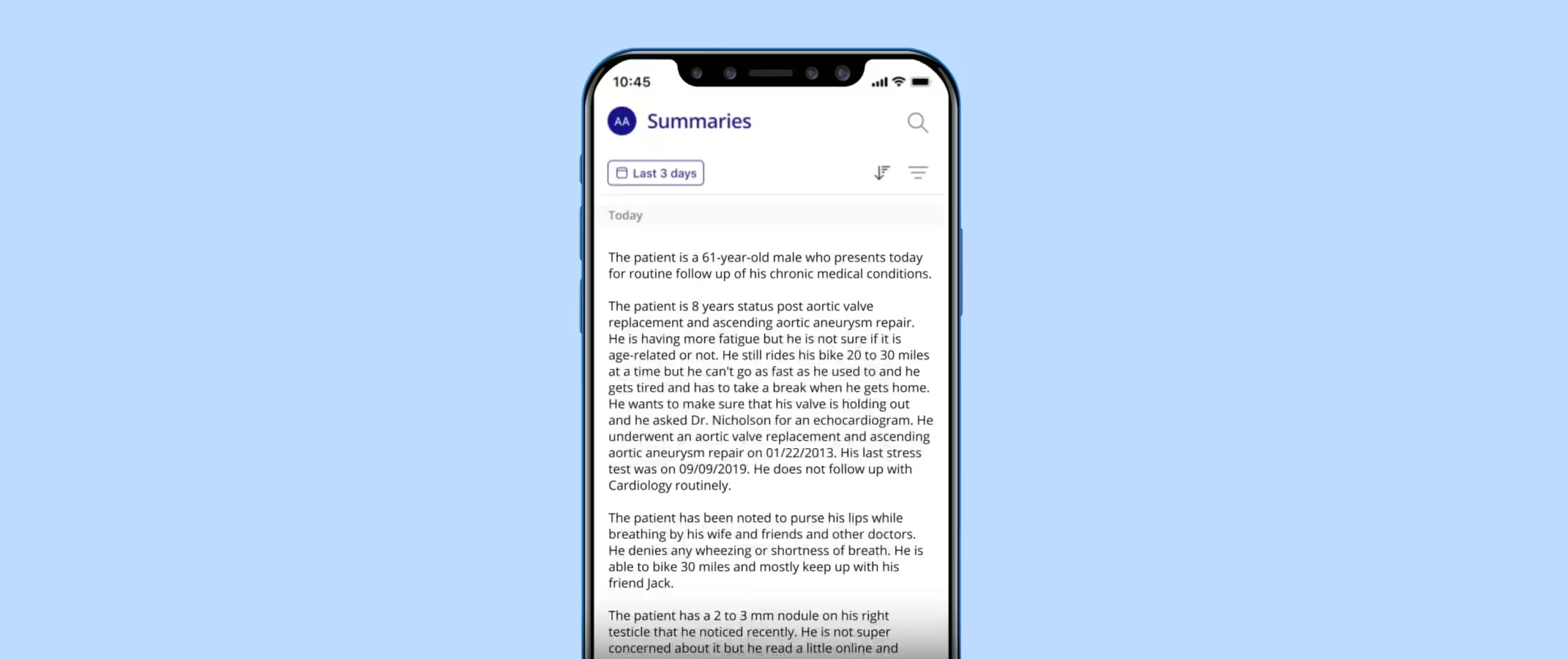
Owned by Microsoft, Nuance DAX is the heavyweight in the room, designed for massive health systems deeply embedded in the Epic ecosystem. It offers high accuracy and is backed by Microsoft’s robust security infrastructure.
The major downsides are cost and agility; it is prohibitively expensive for private practice and implementation can take months, often costing 3 to 5 times more than agile competitors.
Best fit: Hospital administrators managing 500+ provider systems using Epic.
Key Features:
- Direct, deep integration with Epic
- Microsoft security infrastructure backing
- High-accuracy ambient listening
- Designed for large-scale deployment
Pricing:
- Enterprise Only ($500 to $800+ per provider/month)
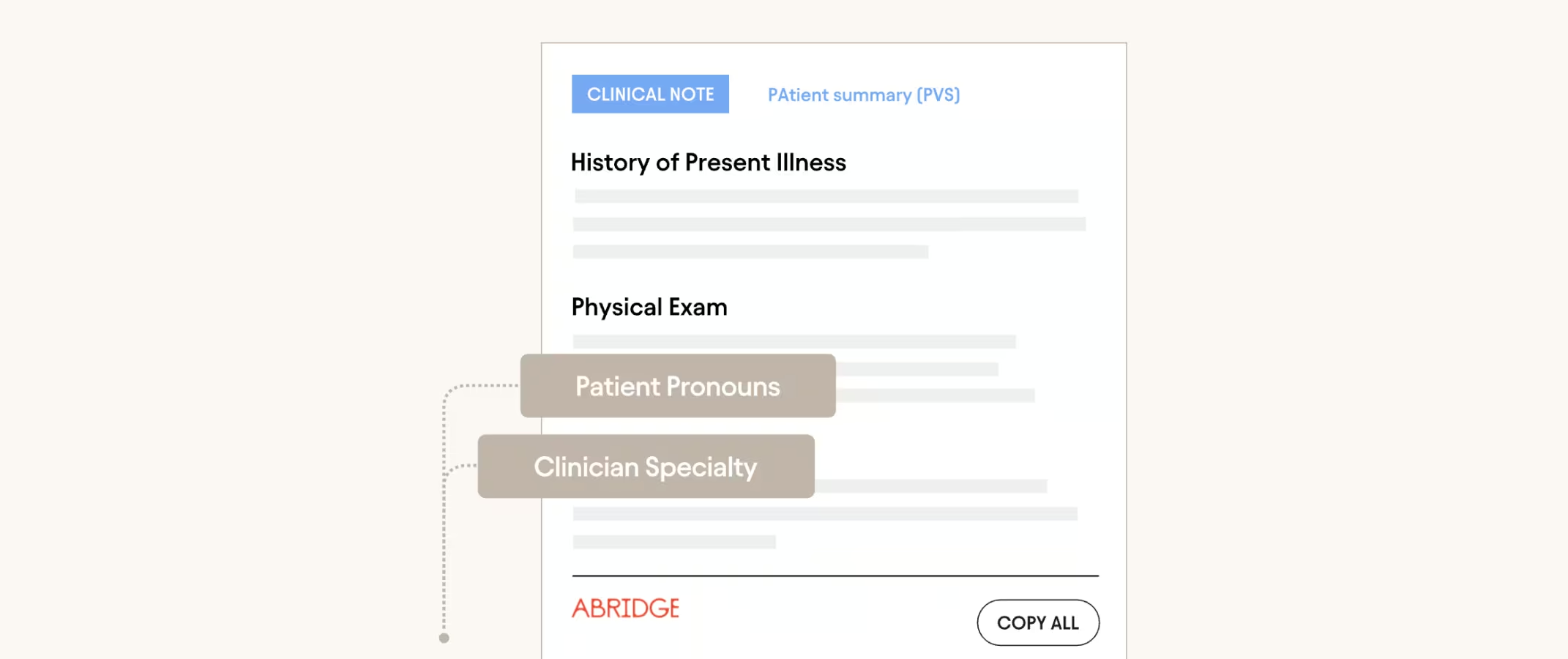
7. Abridge – Best for evidence verification
Abridge focuses on transparency and "trustworthy AI," allowing doctors to click on a part of the note to hear the specific audio recording source. It also produces patient-friendly summaries and has cultivated a strong partnership with Epic.
Currently, Abridge is an enterprise-only solution, meaning independent clinicians cannot simply sign up and use it; access is gated behind health system contracts.
Best fit: Health systems prioritizing evidence verification and patient summaries.
Key Features:
- "Trust layer" links text to audio source
- Generates patient-facing summaries
- Deep Epic integration
- Focus on reducing hallucinations
Pricing:
- Enterprise Only
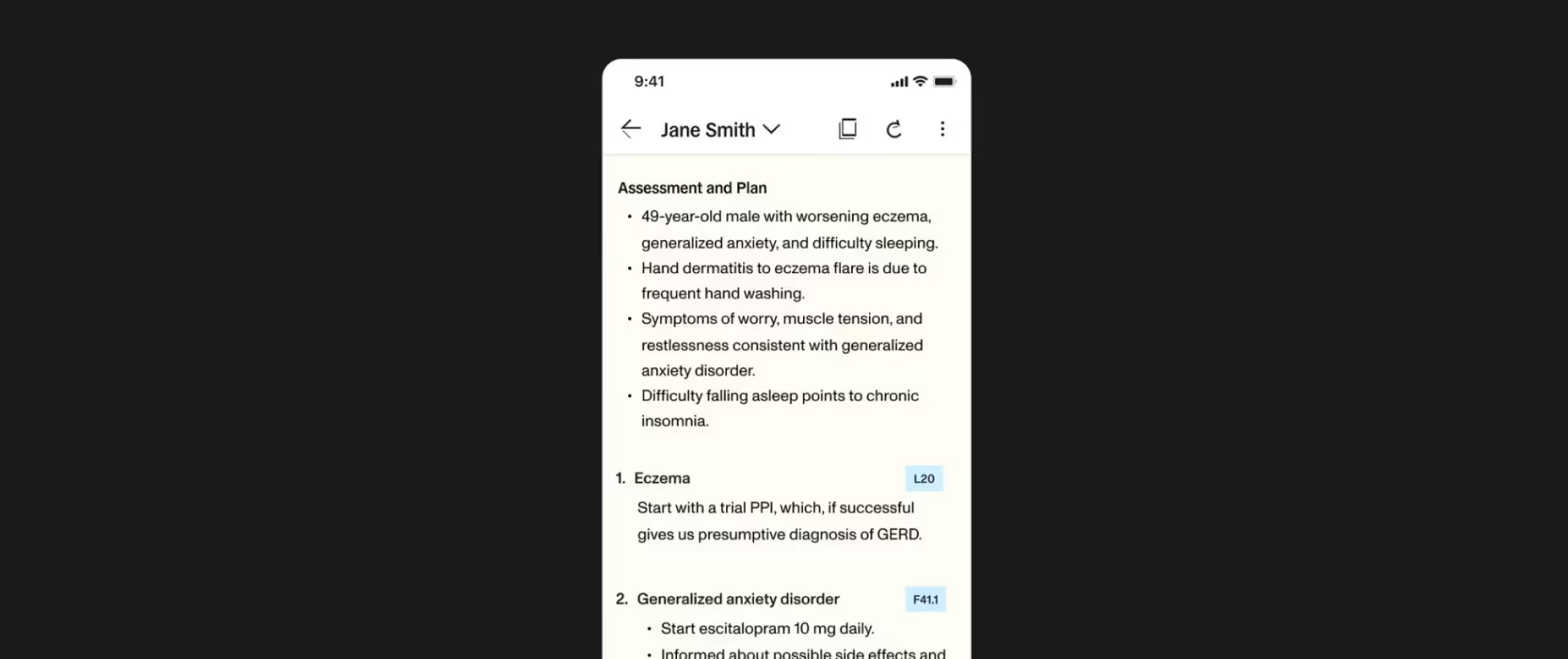
8. Suki – Best for voice command workflows
Suki differentiates itself by acting as a digital assistant rather than just a passive scribe. In addition to generating notes, it allows users to use voice commands to pull up patient info, dictate letters, or retrieve data, backed by a partnership with Google.
The drawback is that the command-based interface can feel unnatural during a patient visit, requiring specific trigger phrases that may break the flow of conversation.
Best fit: Providers who prefer a voice-assistant experience over pure ambient listening.
Key Features:
- Voice commands for data retrieval and orders
- Dual dictation and ambient modes
- Google partnership for tech backend
- Workflow automation commands
Pricing:
- Contact Sales (typically ~$299/month)

9. Sunoh AI – Best budget option for mobile
Sunoh is a newer, smaller player attempting to compete on mobility and price. It offers a lightweight, mobile-first design that aims to make documentation easy on the go.
As a newer entrant, it lacks the advanced features, robust security certifications, and deep integrations of established players, and users often report lower accuracy requiring more manual editing.
Best fit: Clinicians on a tight budget who prioritize mobile use.
Key Features:
- Mobile-first application design
- Lower price point capabilities
- Simple setup process
- Lightweight interface
Pricing:
- Varies (Budget-tier)
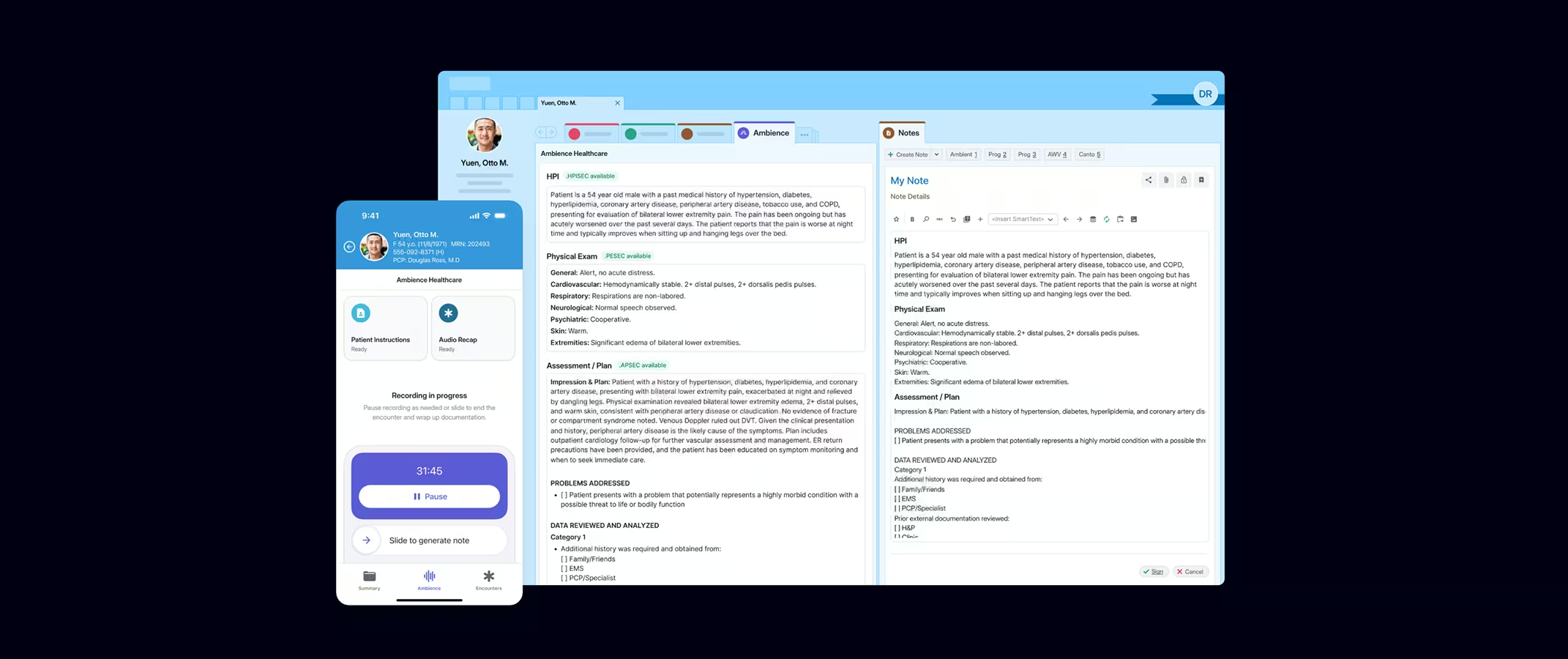
10. Ambience Healthcare – Best for specialty nuances
Ambience Healthcare markets its "AutoScribe" as a deeply specialty-aware operating system designed to capture the nuances of complex fields like psychiatry and cardiology. It includes features for pre-charting assistance, patient handouts, and referral letters.
Similar to Abridge and DAX, Ambience targets large organizational deployments and is generally unavailable for individual purchase, with longer implementation times and higher costs.
Best fit: Large specialty groups (Psychiatry, Cardiology) needing deep customization.
Key Features:
- Specialty-specific customization
- Pre-charting assistance
- Generates patient handouts and referrals
- Deep specialty vocabularies
Pricing:
- Enterprise Only
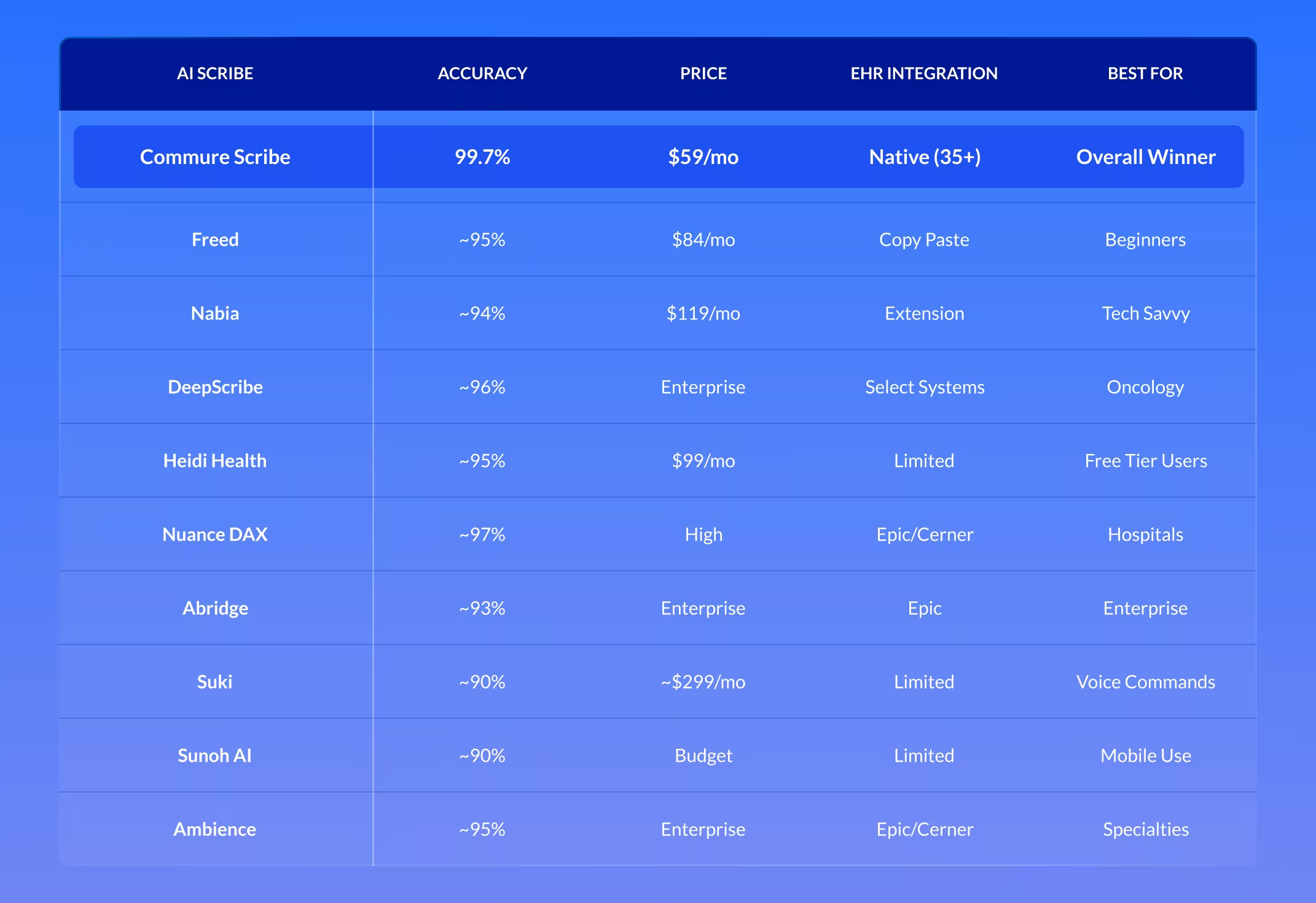
Comparison Table
Why Commure Scribe Is the Smartest Choice
After evaluating the field, the data points to one clear winner for the majority of clinicians.
Commure Scribe delivers the "holy grail" of medical technology: it is better, faster, and cheaper.
- Better: 99.7% accuracy ensures you do not waste time correcting errors.
- Faster: Sub-minute note generation eliminates "pajama time."
- Cheaper: At $59/month, it provides a significantly higher ROI than Freed ($84), Nabla ($119), or enterprise tools ($300+).
While Freed is a friendly option, the manual copy-paste workflow becomes a burden after the tenth patient of the day. Commure Scribe’s ability to push data directly into systems like Athena, Practice Fusion, and eClinicalWorks changes the game.
Key Benefits of Adopting an AI Scribe
If you are still on the fence, consider the ROI of implementing this technology in your practice.
- Eliminate "Pajama Time": Clinicians today face an epidemic of after-hours charting. By closing charts in real time during the visit, AI scribes allow you to leave the clinic when your last patient does.
- Increase Revenue: Undercoding is a major revenue leak. AI scribes like Commure analyze the clinical dialogue and suggest accurate billing codes, ensuring you capture the full value of complex visits (Level 4 and 5) that are often downcoded due to lack of documentation time.
- Focus on Patients, Not Screens: Patient satisfaction scores drop when doctors stare at computers. Ambient listening removes the physical barrier of the laptop, allowing you to maintain eye contact and build trust.
- Reduce Overhead: Human scribes cost $20 to $30 an hour and require management. An AI scribe costs roughly $2 to $3 per day and is available 24/7 with zero training.
Conclusion
The era of manual charting is officially over. In 2026, utilizing an AI medical scribe is no longer a futuristic luxury. It is a necessity for maintaining both financial health and provider well-being. The shift toward ambient intelligence is reshaping healthcare delivery, allowing clinicians to reclaim their evenings and return their focus to what matters most: the patient.
While the market is crowded with options ranging from budget mobile apps to massive enterprise systems, Commure Scribe stands apart as the definitive choice for the modern practitioner. By solving the critical pain points that competitors like Freed, Nabla, and Nuance struggle with, it offers a rare combination of enterprise-grade accuracy, seamless integration, and accessible pricing. The right tool doesn't just write notes; it transforms your practice.
Common Questions About AI Medical Scribes
Yes, reputable AI scribes (including all those listed in our top 10) are fully HIPAA compliant. They use encryption for data at rest and in transit. However, always verify if a tool offers a Business Associate Agreement (BAA) before using it in your practice.
We are fully HIPAA compliant, built with SOC2. We take your patient’s information and security extremely seriously and we never share data with third-parties. Furthermore, we own the entire data-pipeline ensuring every note that is created is securely stored.
We are fully HIPAA compliant, built with SOC2. We take your patient’s information and security extremely seriously and we never share data with third-parties. Furthermore, we own the entire data-pipeline ensuring every note that is created is securely stored.
In many cases patient consent is not legally required, 39 states and DC, however we recommend you inform them. As general guidance we recommend letting the patient know that this tooling will help provide better patient care, make your work easier, and lead to a more optimal experience. Consent can be achieved through an intake form.
Our proprietary large language models (LLMs) continuously enhance their performance with each use, thanks to ongoing model innovation. As you interact with Commure Scribe, it learns and adapts, becoming increasingly accurate and efficient over time. Stay ahead with an AI medical scribe that evolves with the needs of your practice.
Best AI Medical Scribes 2026: Top 10 Tools Compared
Lorem ipsum dolor sit amet, consectetur adipiscing elit. Suspendisse varius enim in eros elementum tristique. Duis cursus, mi quis viverra ornare, eros dolor interdum nulla, ut commodo diam libero vitae erat. Aenean faucibus nibh et justo cursus id rutrum lorem imperdiet. Nunc ut sem vitae risus tristique posuere.

Written by the
Lorem ipsum dolor sit amet, consectetur adipiscing elit. Suspendisse varius enim in eros elementum tristique. Duis cursus, mi quis viverra ornare, eros dolor interdum nulla, ut commodo diam libero vitae erat. Aenean faucibus nibh et justo cursus id rutrum lorem imperdiet. Nunc ut sem vitae risus tristique posuere.
•
min read
Heading 1
Heading 2
Heading 3
Heading 4
Heading 5
Heading 6
Lorem ipsum dolor sit amet, consectetur adipiscing elit, sed do eiusmod tempor incididunt ut labore et dolore magna aliqua. Ut enim ad minim veniam, quis nostrud exercitation ullamco laboris nisi ut aliquip ex ea commodo consequat. Duis aute irure dolor in reprehenderit in voluptate velit esse cillum dolore eu fugiat nulla pariatur.
Block quote
Ordered list
- Item 1
- Item 2
- Item 3
Unordered list
- Item A
- Item B
- Item C
Bold text
Emphasis
Superscript
Subscript
Heading 1
Heading 2
Heading 3
Heading 4
Heading 5
Heading 6
Lorem ipsum dolor sit amet, consectetur adipiscing elit, sed do eiusmod tempor incididunt ut labore et dolore magna aliqua. Ut enim ad minim veniam, quis nostrud exercitation ullamco laboris nisi ut aliquip ex ea commodo consequat. Duis aute irure dolor in reprehenderit in voluptate velit esse cillum dolore eu fugiat nulla pariatur.
Block quote
Ordered list
- Item 1
- Item 2
- Item 3
Unordered list
- Item A
- Item B
- Item C
Bold text
Emphasis
Superscript
Subscript
Yes, reputable AI scribes (including all those listed in our top 10) are fully HIPAA compliant. They use encryption for data at rest and in transit. However, always verify if a tool offers a Business Associate Agreement (BAA) before using it in your practice.
We are fully HIPAA compliant, built with SOC2. We take your patient’s information and security extremely seriously and we never share data with third-parties. Furthermore, we own the entire data-pipeline ensuring every note that is created is securely stored.
We are fully HIPAA compliant, built with SOC2. We take your patient’s information and security extremely seriously and we never share data with third-parties. Furthermore, we own the entire data-pipeline ensuring every note that is created is securely stored.
In many cases patient consent is not legally required, 39 states and DC, however we recommend you inform them. As general guidance we recommend letting the patient know that this tooling will help provide better patient care, make your work easier, and lead to a more optimal experience. Consent can be achieved through an intake form.
Our proprietary large language models (LLMs) continuously enhance their performance with each use, thanks to ongoing model innovation. As you interact with Commure Scribe, it learns and adapts, becoming increasingly accurate and efficient over time. Stay ahead with an AI medical scribe that evolves with the needs of your practice.